
FATI (‘Free-Air Temperature Increase’, UAntwerp, PLECO)
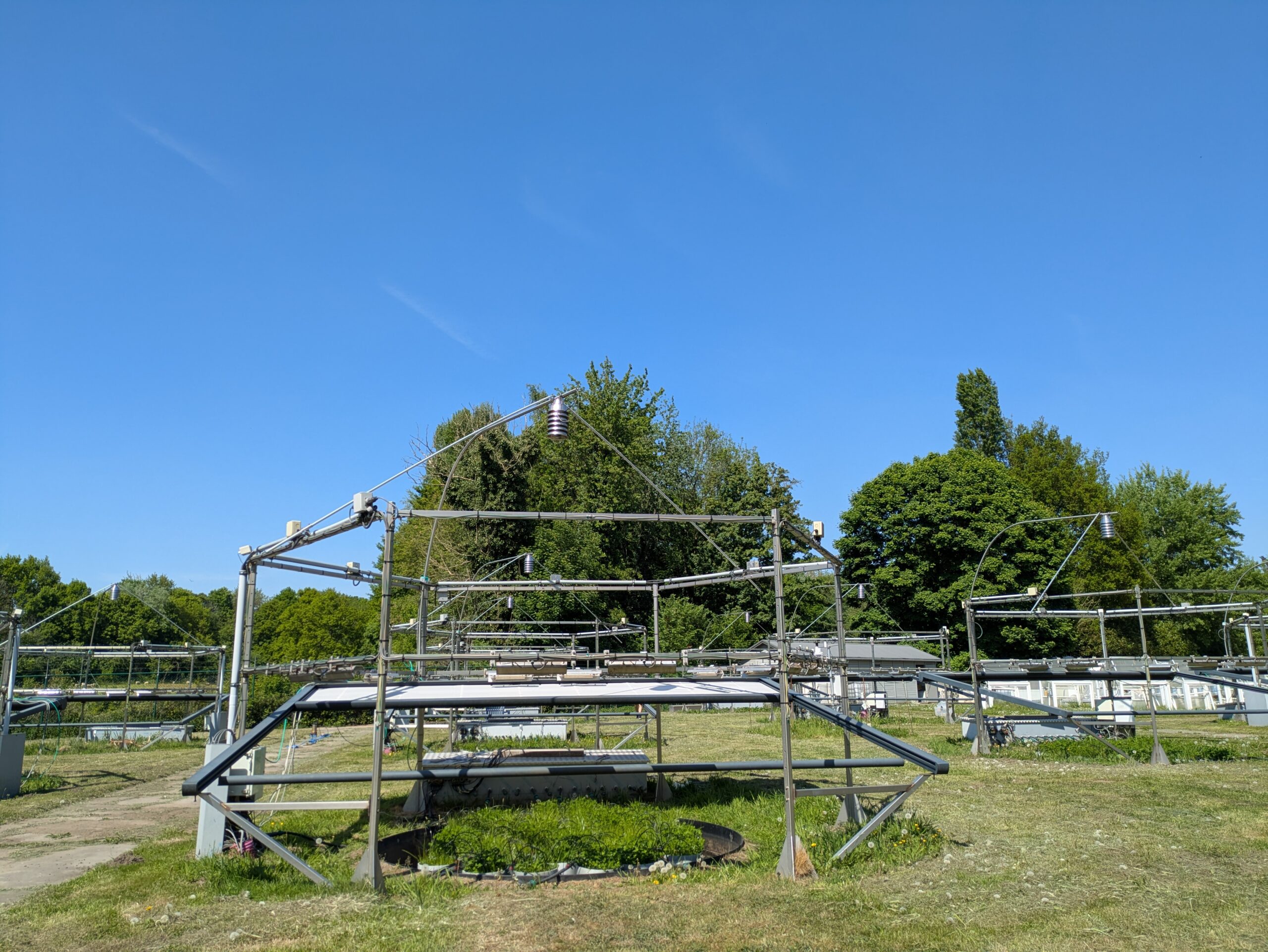
The Antwerp FATI is a facility to experimentally simulate the impact on ecosystems of future precipitation regimes, climate-warming and especially climate extremes such as intense droughts and heat waves (e.g. temperatures up to 10 °C above ambient). By using infrared heaters and automated rainout shelters in combination with programmable irrigation, the system can simulate such extreme events in the open air, in twelve 7 m² plots, under natural light and wind. Each plot can contain one large mesocosm unit, or many smaller ones in separate containers (in total > 300). This approach allows for studies with (i) many levels per experimental factor and many replicates, (ii) multiple interacting factors, (iii) multiple biodiversity levels. Measurements include micro-climate (air temperature, relative humidity, incoming and outgoing radiation, etc.), canopy temperature with infrared thermometry, soil water content, as well as a range of possible manual measurements with available ecophysiological instruments (e.g. photosynthesis, stomatal functioning, leaf pigments). Collaborating labs nearby on soil microbiology, plant biochemistry and molecular biology, and ecosystem biogeochemistry.
Example Projects at This Facility
Regime Shift
Shifting rainfall regimes: a multi-scale analysis of ecosystem response
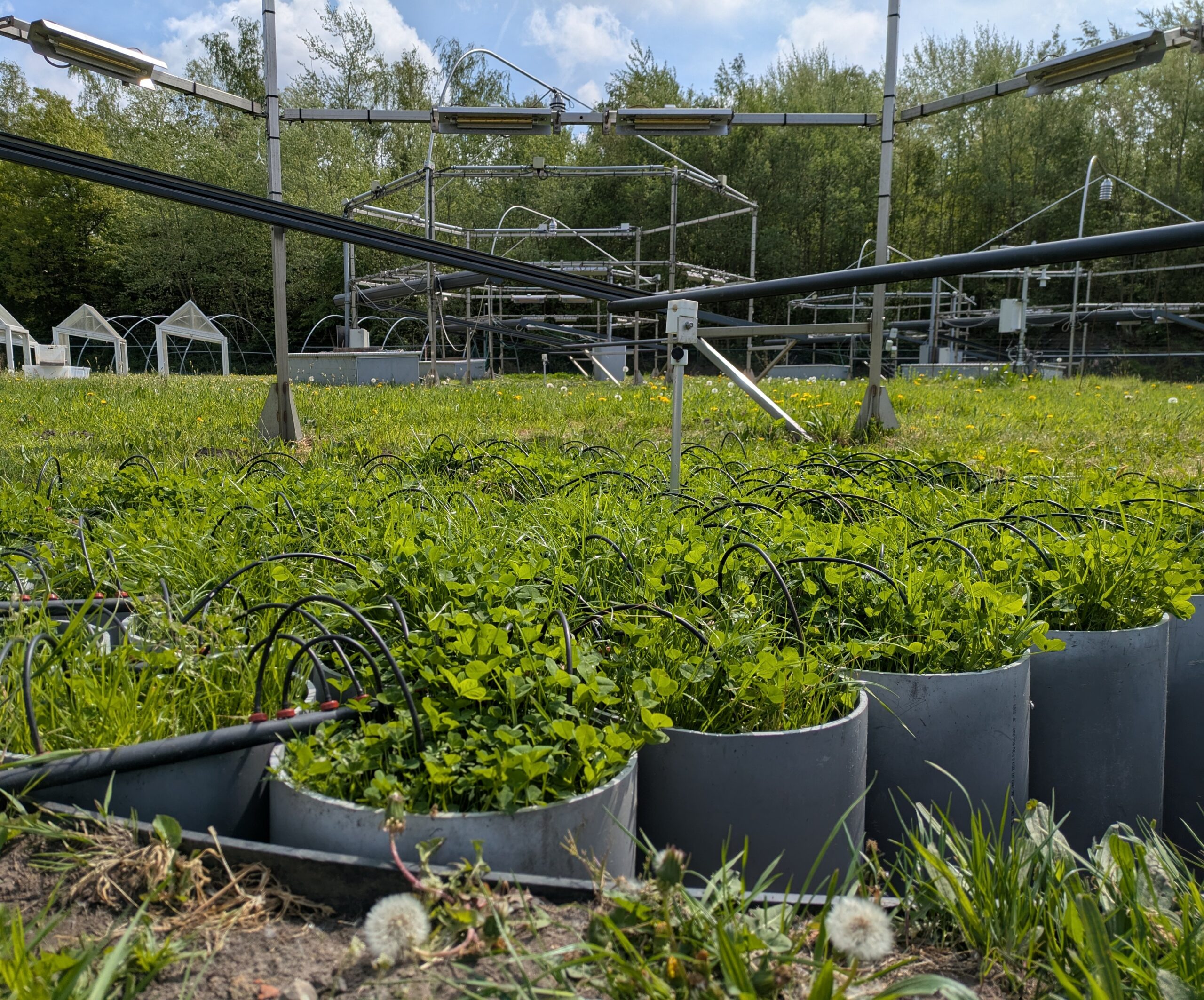
This multi- and interdisciplinary project focused on the impact of more persistent rainfall regimes, a new fingerprint of climate change where both dry periods and wet periods get progressively longer. Researchers specializing in plant ecology, microbiology, soil structure, and genomics combined forces to study the responses of temperate grasslands, and how agricultural management might adapt to mitigate the consequences.
Horizon Europe project IRISCC
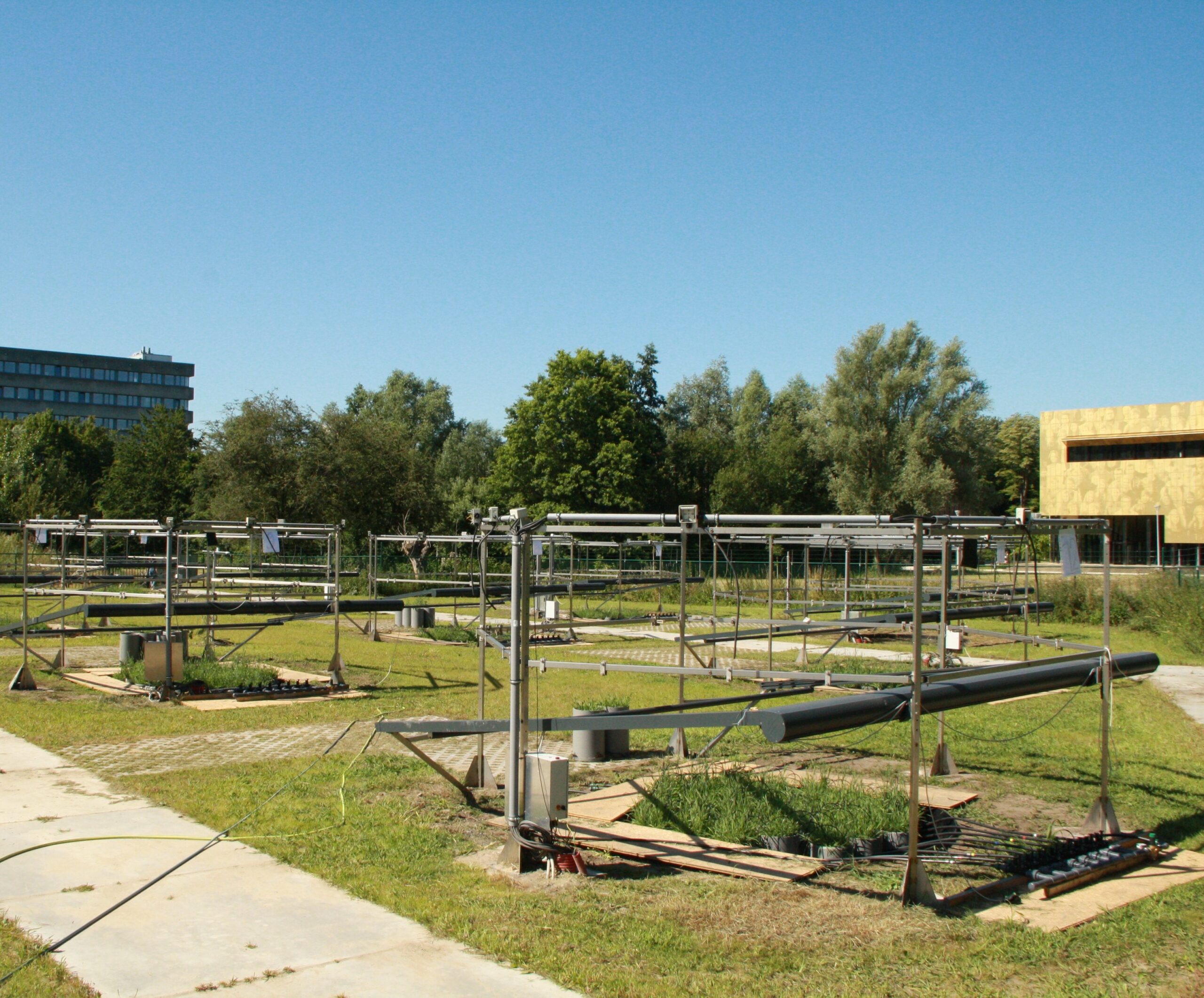
The international IRISCC project intends to enhance societal resilience to climate change driven risks across a wide variety of sectors. UAntwerp focuses in particular on agroecological approaches to protect crops and grasslands against climate extremes such as heatwaves and drought. IRISCC provides funding for transnational access to research facilities through a series of calls. Four incoming researchers will carry out projects at the Antwerp FATI and Mesoscale Ecotron, starting from 2026.
Horizon Europe MSCA
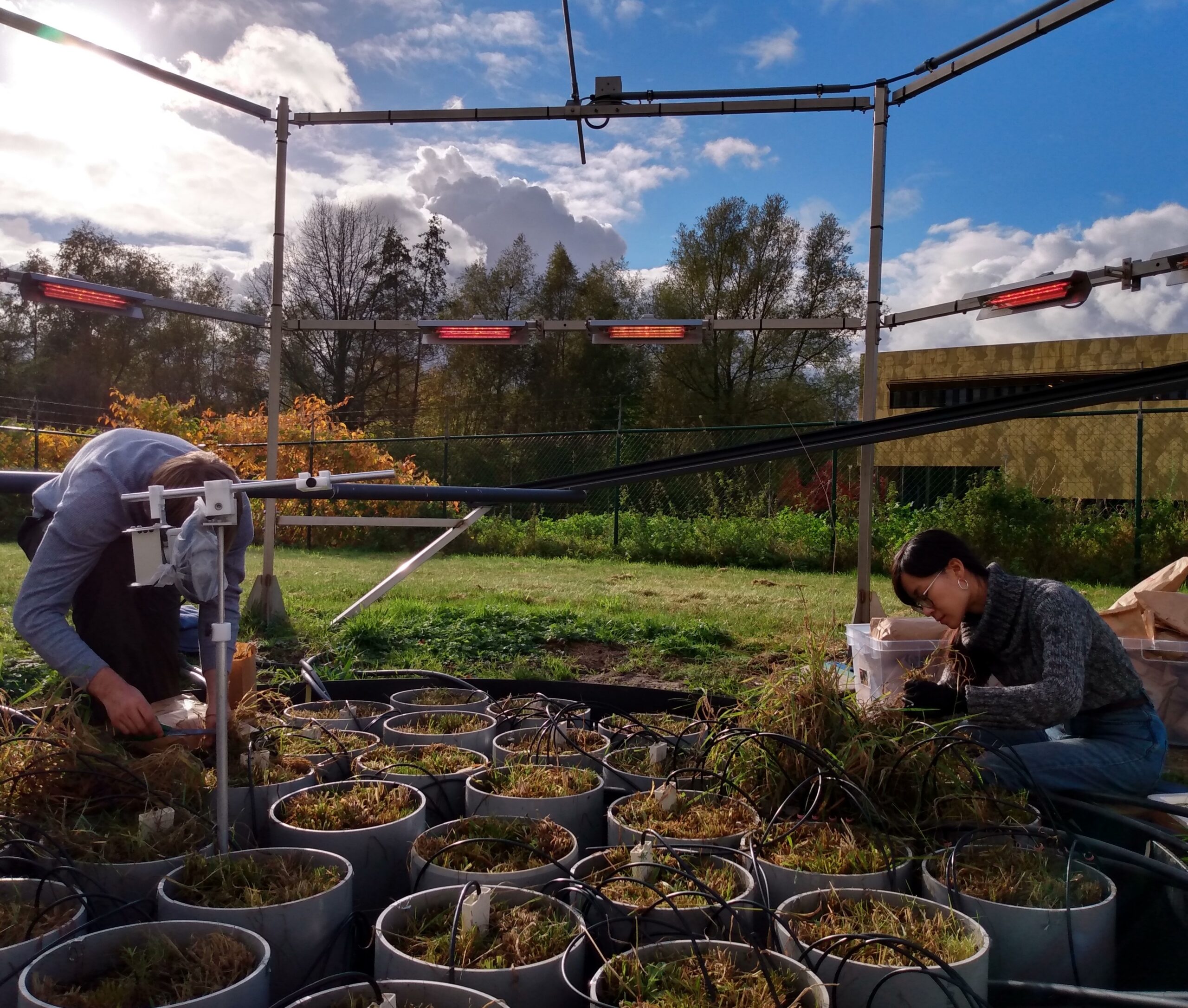
In the Horizon Europe Marie Skłodowska-Curie Action ‘The role of arbuscular mycorrhizal fungi (AMF) in agricultural grasslands exposed to increasingly persistent weather patterns’, dr. Naheeda Begum studies how plant community composition and soil inoculation with beneficial fungi could safeguard yield quantity and quality for farming business in the more variable and less predictable climate that lies ahead.
Selected Publications
2025 — Vindušková O. et al. More persistent precipitation regimes induce soil degradation. Geoderma, 455, 117230.
2024 — Reynaert S. et al. Can permanent grassland soils with elevated organic carbon buffer negative effects of more persistent precipitation regimes on forage grass performance? Science of the Total Environment, 918, 170623.
2023 — Li L. et al. Longer dry and wet spells alter the stochasticity of microbial community assembly in grassland soils. Soil Biology and Biochemistry, 178, 108969.
2023 — Reynaert S. et al. Basalt addition improves the performance of young grassland monocultures under more persistent weather featuring longer dry and wet spells. Agricultural and Forest Meteorology, 340, 109610.
2021 — Reynaert S., De Boeck H.J., Verbruggen E. et al. Risk of short-term biodiversity loss under more persistent precipitation regimes. Global Change Biology, 27(8), 1614–1626.
See full publication list
2026 — Li L., Radujković D., Nijs I. et al. Effect of increasing persistence of alternating drought and rainfall events on grassland soil microbes intensifies over time. Communications Earth & Environment.
2025 — Vindušková O. et al. More persistent precipitation regimes induce soil degradation. Geoderma, 455, 117230.
2025 — Reynaert S., Nijs I., D’Hose T. et al. More persistent precipitation regimes weaken the micro-climate buffering capacity of forage grasses during a hot summer. Global Change Biology, 31(2), e70078.
2024 — Reynaert S. et al. Can permanent grassland soils with elevated organic carbon buffer negative effects of more persistent precipitation regimes on forage grass performance? Science of the Total Environment, 918, 170623.
2023 — Li L. et al. Longer dry and wet spells alter the stochasticity of microbial community assembly in grassland soils. Soil Biology and Biochemistry, 178, 108969.
2023 — Reynaert S. et al. Basalt addition improves the performance of young grassland monocultures under more persistent weather featuring longer dry and wet spells. Agricultural and Forest Meteorology, 340, 109610.
2023 — Vindušková O., Deckmyn G., Bortier M. et al. Combined effects of soil 3D spatial heterogeneity and plant clumping on ecosystem processes in grasslands. Ecology and Evolution, 13(10), e10604.
2023 — Zi L. et al. Ecometabolomic analysis of the effect of more persistent precipitation regimes reveals metabolic adjustments in four grassland species. Environmental and Experimental Botany, 215, 105489.
2023 — Zi L. et al. Biochemical composition changes linked to tolerance of four grassland species under more persistent precipitation regimes. Physiologia Plantarum, 175(6), e14083.
2023 — Reynaert S., Lembrechts J.J., De Boeck H.J. et al. Direct and higher-order interactions in plant communities under increasing weather persistence. Oikos, e10128.
2023 — Li L., Lin Q., Nijs I. et al. More persistent weather causes a pronounced soil microbial legacy but does not impact subsequent plant communities. Science of the Total Environment, 903, 166570.
2022 — Reynaert S., Zi L., AbdElgawad H. et al. Does previous exposure to extreme precipitation regimes result in acclimated grassland communities? Science of the Total Environment, 838, 156368.
2021 — Reynaert S., De Boeck H.J., Verbruggen E. et al. Risk of short-term biodiversity loss under more persistent precipitation regimes. Global Change Biology, 27(8), 1614–1626.