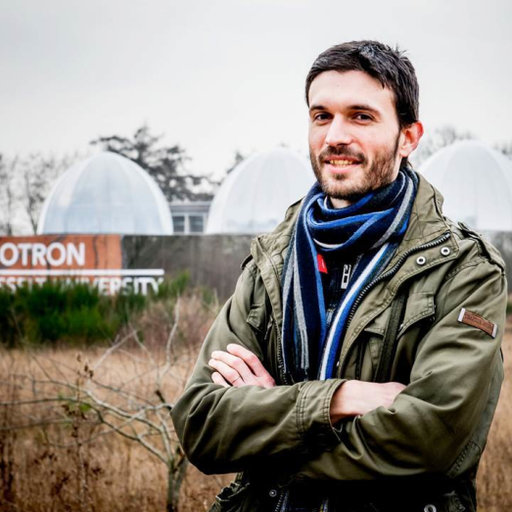
Macroscale Ecotron (UHasselt, CMK)
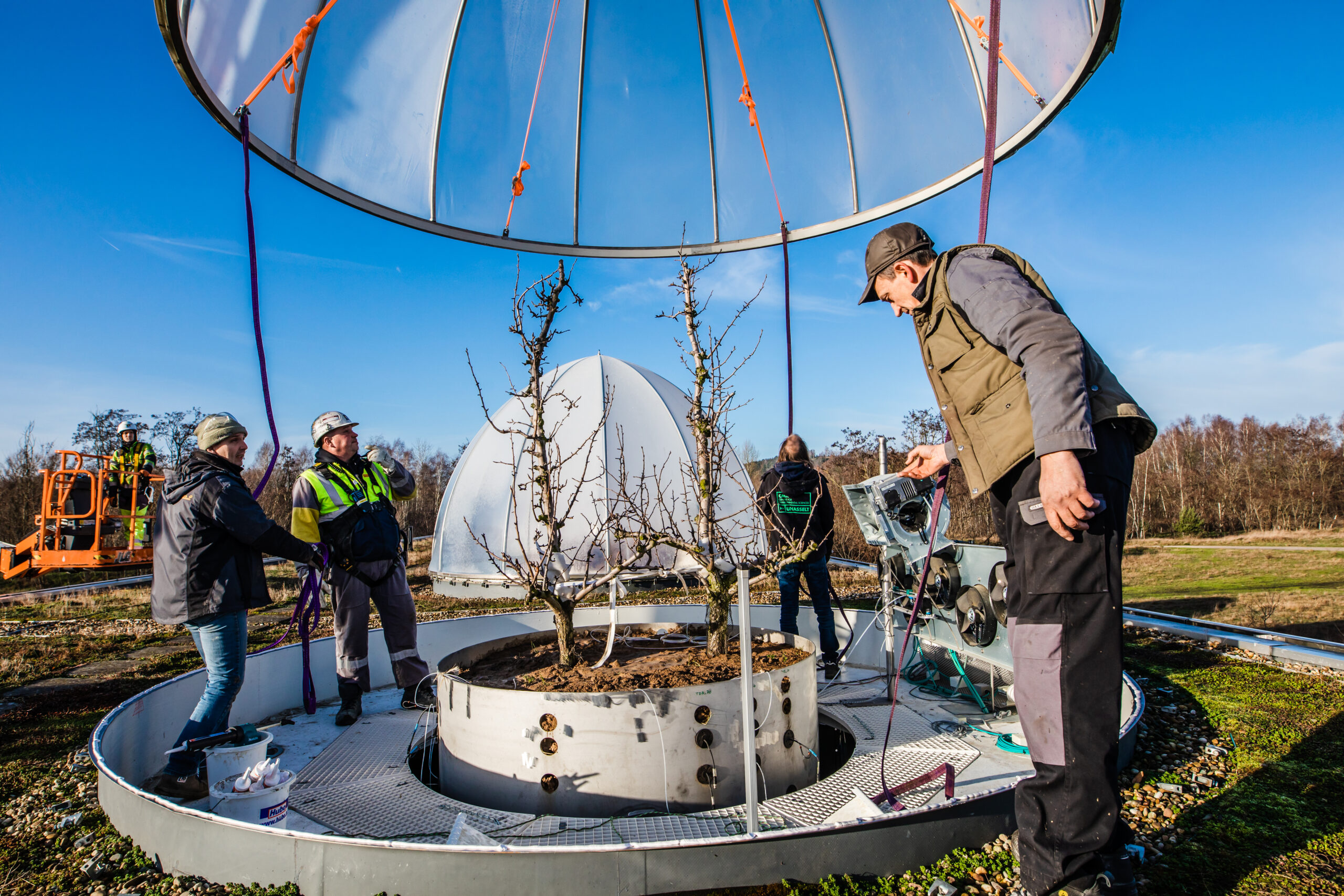
Macroscale Ecotron features 12 large climate-controlled chambers, each consisting of (i) a sunlit atmospheric compartment (dome) containing the vegetation and (ii) a belowground compartment containing the soil (lysimeter). A wide range of atmosphere and soil parameters can be set and controlled to simulate different environments (CO2 levels, temperature, air humidity, rainfall, wind, etc.), while more are monitored at high time and spatial resolution (e.g. soil water content and composition). At the same time, the system continuously measures the response of the ecosystem to these factors: CO2 exchange with the atmosphere in photosynthesis and respiration, methane exchange, water loss, soil nutrient fluxes, etc. Within AnaEE-Europe, Ecotrons are the most advanced and heavily instrumented facilities for ecosystem studies.
Example Projects at This Facility
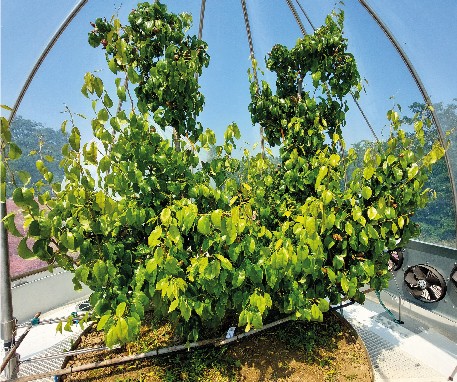
QPear experiment
Pear fruit production is among the core agricultural industries of Europe. In this project, we assess how the growth of pear trees, pear quality and functioning of the pear orchard agri-ecosystems will be affected by future climate. The experiment started in the autumn of 2022.
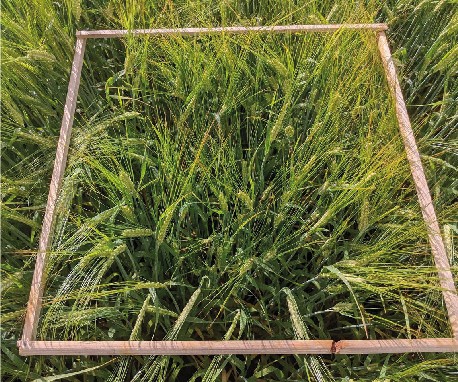
BioFoodOnMarS
Marginal lands are left aside from agricultural use, because they are too poor, too polluted, or too dry to be profitable. This represents a large area in Europe, more than 38.5 million Ha. On the other hand, there is ever-increasing pressure on arable land to be able to feed the increasing world population. In this project, we assess whether we can make this marginal land attractive again for food or feed production? If yes, how? And can we do that with a minimal C footprint?
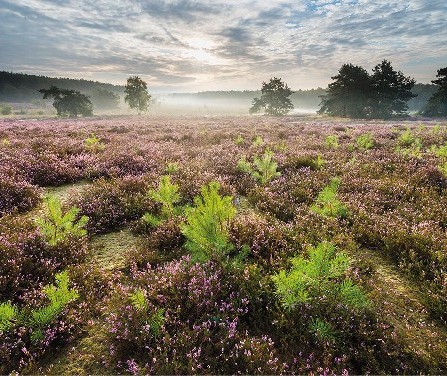
Climate Change Impacts on Heathlands
European heathlands are unique natural landscapes, providing a wide range of ecosystem services. This experiment simulates the effect of future climate on the functioning of the heathland ecosystem, and the consequences for society. Large plots of 9-year-old heathland of Mechelse Heide are located in mesocosms and subjected to 6 distinct past and future climate scenarios ranging from the climate of 1950 to the climate of 2070. In this long-term experiment, we assess climate impacts on biodiversity, carbon, nutrient and water cycles and vegetation ecophysiology of the heathland ecosystem. We are particularly interested in the role of soil microorganisms in the processes of carbon sequestration, and how those are affected by climate change.
Selected Publications
2026 — Rineau F., Frank A.H., Groh J. et al. Enhanced weathering leads to substantial C accrual on crop macrocosms. Biogeosciences, 23(7), 2261–2276.
2025 — Su N., Zhang Q., Rineau F. et al. Besides aridity, plant communities are a non-negligible factor in determining soil bacterial and fungal diversity. Ecological Applications, 35(6), e70094.
2024 — Rineau F. et al. Limited effects of crop foliar Si fertilization on a marginal soil under a future climate scenario. Heliyon, 10(1), e23882.
2022 — Rineau F. et al. Change in heathland dominant plants strongly increases C mineralization potential despite marginally affecting microbial community structure. Plant and Soil, 481, 49–62.
2021 — Roy J., Rineau F., De Boeck H.J. et al. Ecotrons: Powerful and versatile ecosystem analysers for ecology, agronomy and environmental science. Global Change Biology, 27(7), 1387–1407.
2019 — Reyns W., Rineau F., Spaak J.W. et al. Food web uncertainties influence predictions of climate change effects on soil carbon sequestration in heathlands. Microbial Ecology, 79, 686–693.
2019 — Rineau F. et al. Towards more predictive and interdisciplinary climate change ecosystem experiments. Nature Climate Change, 9(11), 809–816.
Contact
Prof. Dr. Nadia Soudzilovskaia

Prof. Dr. Francois Rineau