
TERRA-Ecotron (ULiège)
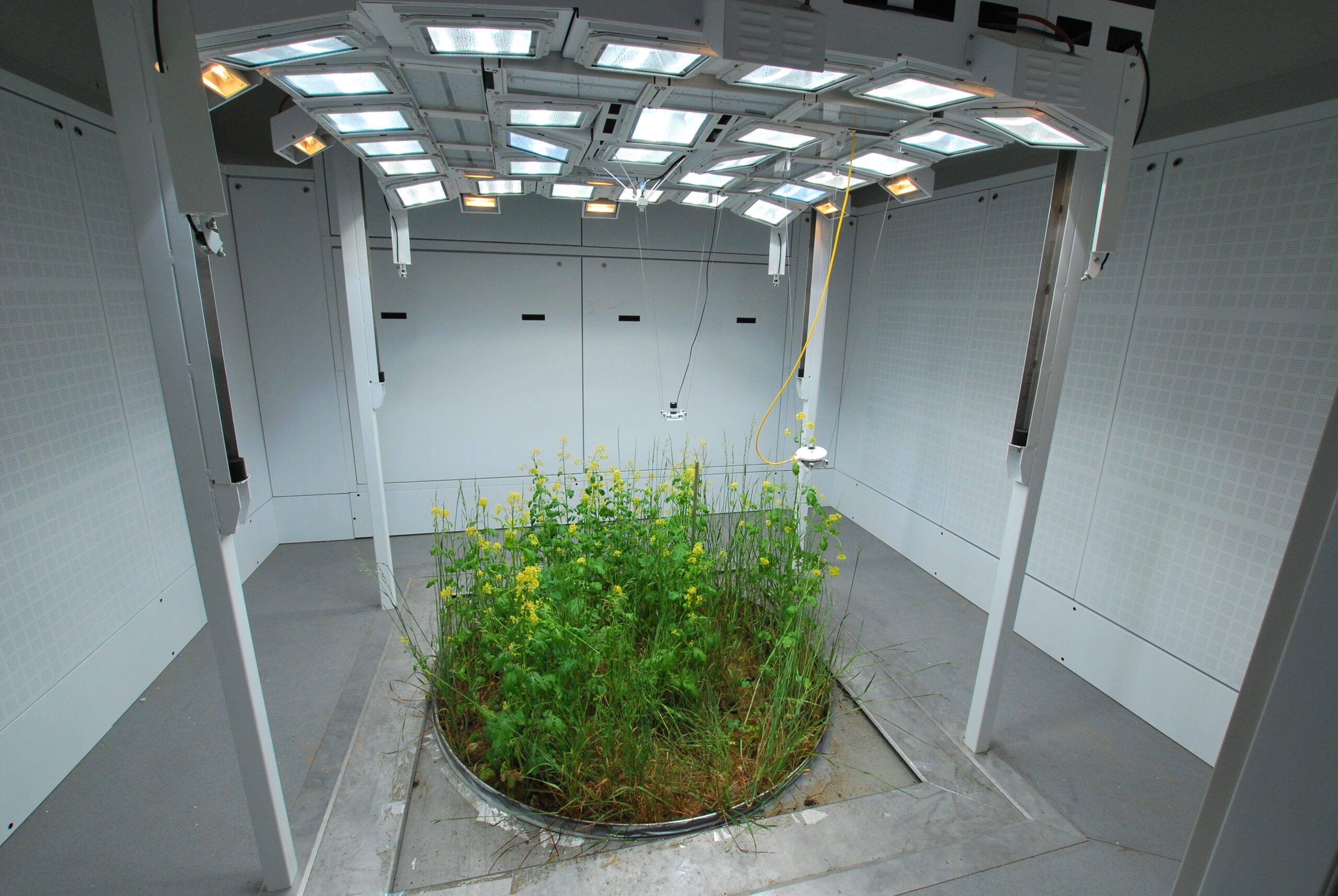
This indoor facility focuses on the study of agro-ecosystems. It currently consists of 8 rooms in which plants grow under climatic conditions (radiation, air temperature and humidity, precipitation, CO2 and O3 concentration) that are continuously monitored and controlled. The soil supporting the vegetation is contained in lysimeters, the upper surfaces of which are inserted into a room. Lysimeters feature a surface area of 2 m² and are 1.5 m deep, with vegetation height limited to 1.5 m. Soil temperature and water potential are conditioned at the bottom of the lysimeter. Soil temperature, water content and matric potential vertical profiles, as well as water leachate amounts, are all measured automatically. Leachate water can also be sampled manually for chemical composition (e.g. carbon, pesticides, etc.). Gas exchanged at the soil surface (CO2, H2O, N2O) can be monitored using automatic chamber,
The University of Liège has recently extended the TERRA-ECOTRON with two new climate-controlled rooms (an increase from 6 to 8) and additional soil sensors. The funding for this upgrade was granted by the Walloon Region as part of a Research Equipment-Infrastructure Grant for Technological Platforms of Excellence.
Visit also ULiège TERRA-ECOTRON website
Example Projects at This Facility
SEE
Seminal Experience with Ecotron
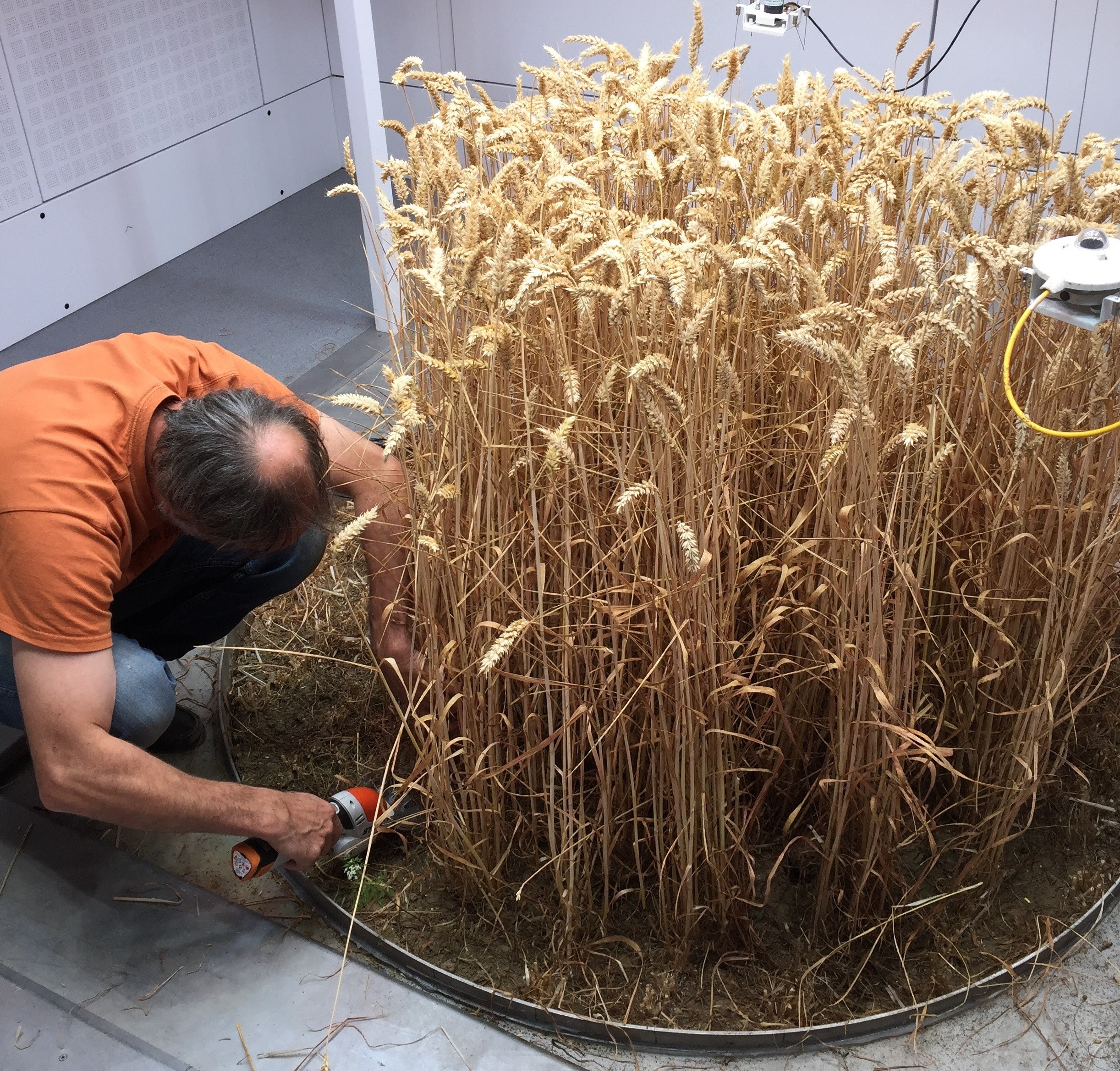
Climate change is predicted to disrupt biogeochemical cycles with uncertain impacts on agricultural yields and the quality of harvested products. Multifactorial climate change experiments are essential to anticipate potential threats and adapt crop production accordingly. Here, an Ecotron was used to quantify carbon and nitrogen cycling and crop growth in winter wheat plantations exposed to the meteorological conditions of the years 2015 and 2094.
BioFair
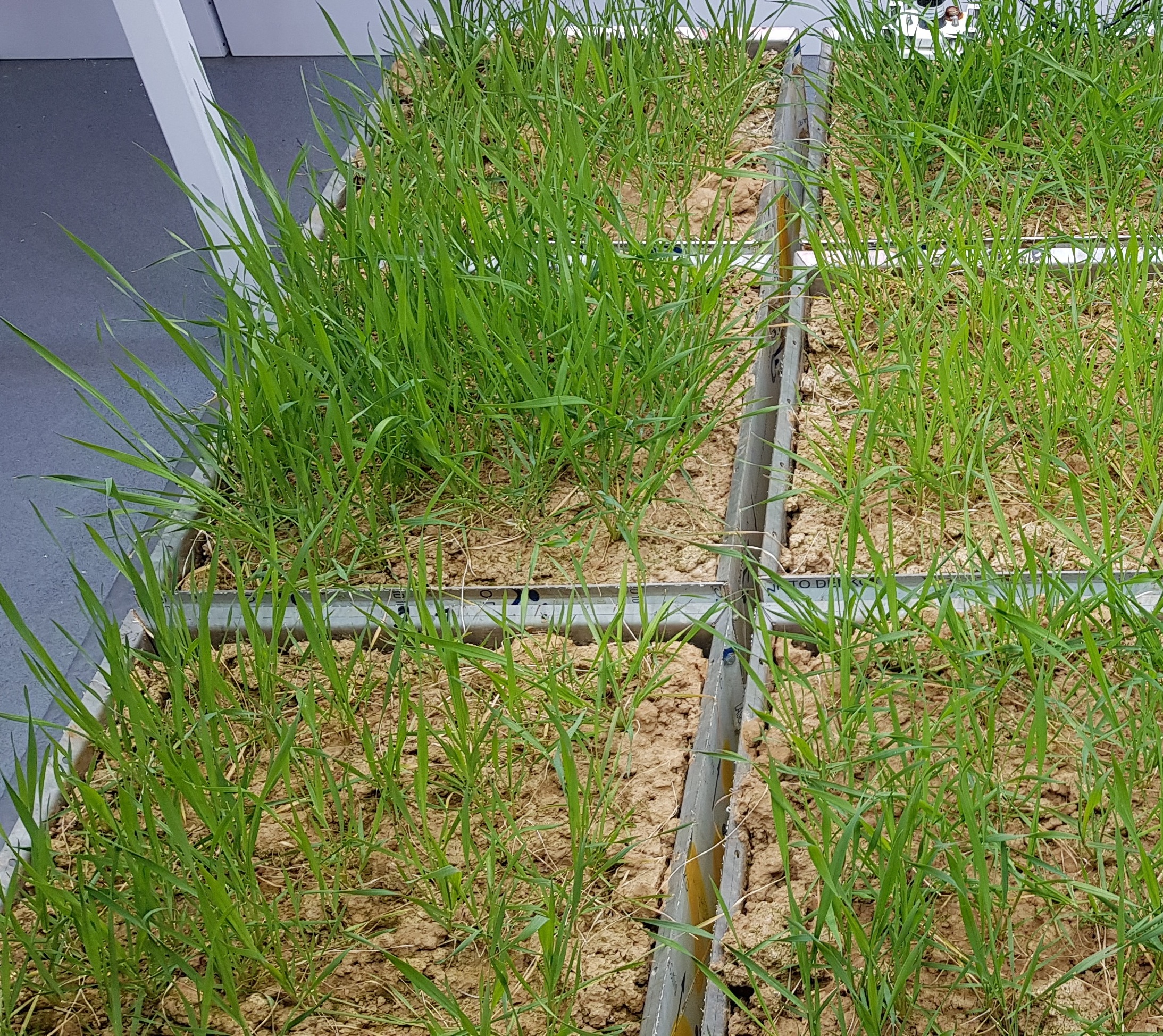
Empirical data is key to anticipate the impact of future climatic conditions on cropping systems and develop land management strategies that are sustainable while ensuring food security. Here, the combined effects of projected increases in temperature, atmospheric CO2- concentrations, solar irradiation and altered precipitation patterns on winter wheat cropping systems were investigated using an Ecotron. Experimental plant-soil systems were subjected to three different meteorological conditions representing a gradient of ongoing climate change implementing the weather patterns of the years 2013, 2068, and 2085 respectively. In each climate, wheat plants were grown in soil monoliths from two differentially managed agricultural fields where one historically received twice as much organic matter (OM) as the other.
CLISMABAN
Phenotyping the banana biodiversity to identify climate smart varieties with optimal market potential in Africa and Europe
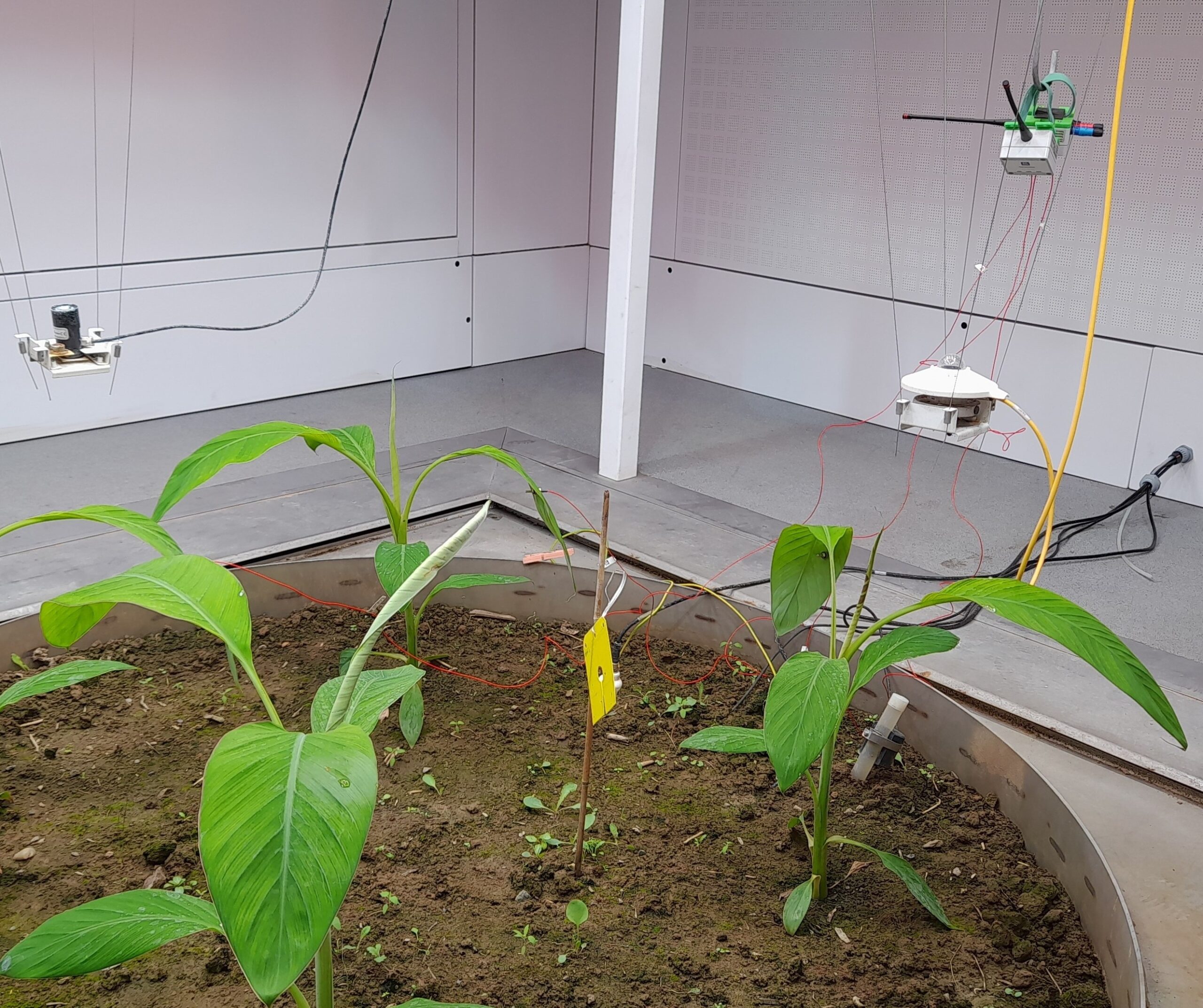
The objectif of the experiment in the TERRA-Ecotron was to determine which phenotype of young banana plants was able to withstand the climate of the Rwandan mountains, thereby allowing for the expansion of cultivation areas into these regions.
The project was funded by LEAP-Agri (A long-term EU-Africa research & innovation Partnership on food and nutrition security and sustainable Agriculture)
Selected Publications
2026 — Bergenhuizen L. et al. Bio-based fertilizers can reach agronomic performance of synthetic fertilizer in broccoli production under two climate scenarios. Environmental Research: Food Systems, 3, 015001.
2025 — Michel J., Brostaux Y., Longdoz B. et al. What if publication bias is the rule and net carbon loss from priming the exception? SOIL, 11, 755–762.
2025 — Michel J. et al. Trade-offs between agronomic yields and sustainability in winter wheat cropping systems under climate change mediated by soil organic matter content. PLOS Climate, 4, e0000616.
2021 — Roy J. et al. Ecotrons: Powerful and versatile ecosystem analysers for ecology, agronomy and environmental science. Global Change Biology, 27, 1387–1407
2019 — Rineau F. et al. Towards more predictive and interdisciplinary climate change ecosystem experiments. Nature Climate Change, 9, 809–816.